Codex Micro Alternative: Is VibeKeys the Better AI Coding Keypad?

Looking for a Codex Micro alternative usually means asking a practical question: do you need a deeply layered Codex controller, or a keypad that fits the way you use AI coding tools every day? VibeKeys starts at $29, works with Codex and several other tools, and includes a dedicated voice-input key. Choose the Max model and you also get live Codex status and remote control when you step away from the keyboard.
The short version: Codex Micro is built for people who want to shape detailed controls around Codex. VibeKeys is the more flexible buy if you care about price, voice input, multiple AI tools, or keeping an eye on an agent from across the room.
What to Look for in a Codex Micro Alternative
Start with the actions you repeat, not the number of keys on the desk. A useful control device should remove small interruptions from AI-assisted development without locking you into a workflow you may outgrow. Four questions quickly narrow the choice:
- Agent compatibility: Can the keypad move between coding tools, or is it designed around one ecosystem?
- Everyday controls: Does it make approval, review, navigation, and voice prompting easier?
- Status awareness: Can you tell when an agent is working, finished, or waiting for input?
- Total cost and setup: Does the extra hardware capability justify the price and configuration effort?
A device can offer plenty of inputs and still feel awkward if you switch agents often or leave long tasks running while you move around. The right choice is the one that shortens your actual loop.
What Is Codex Micro?
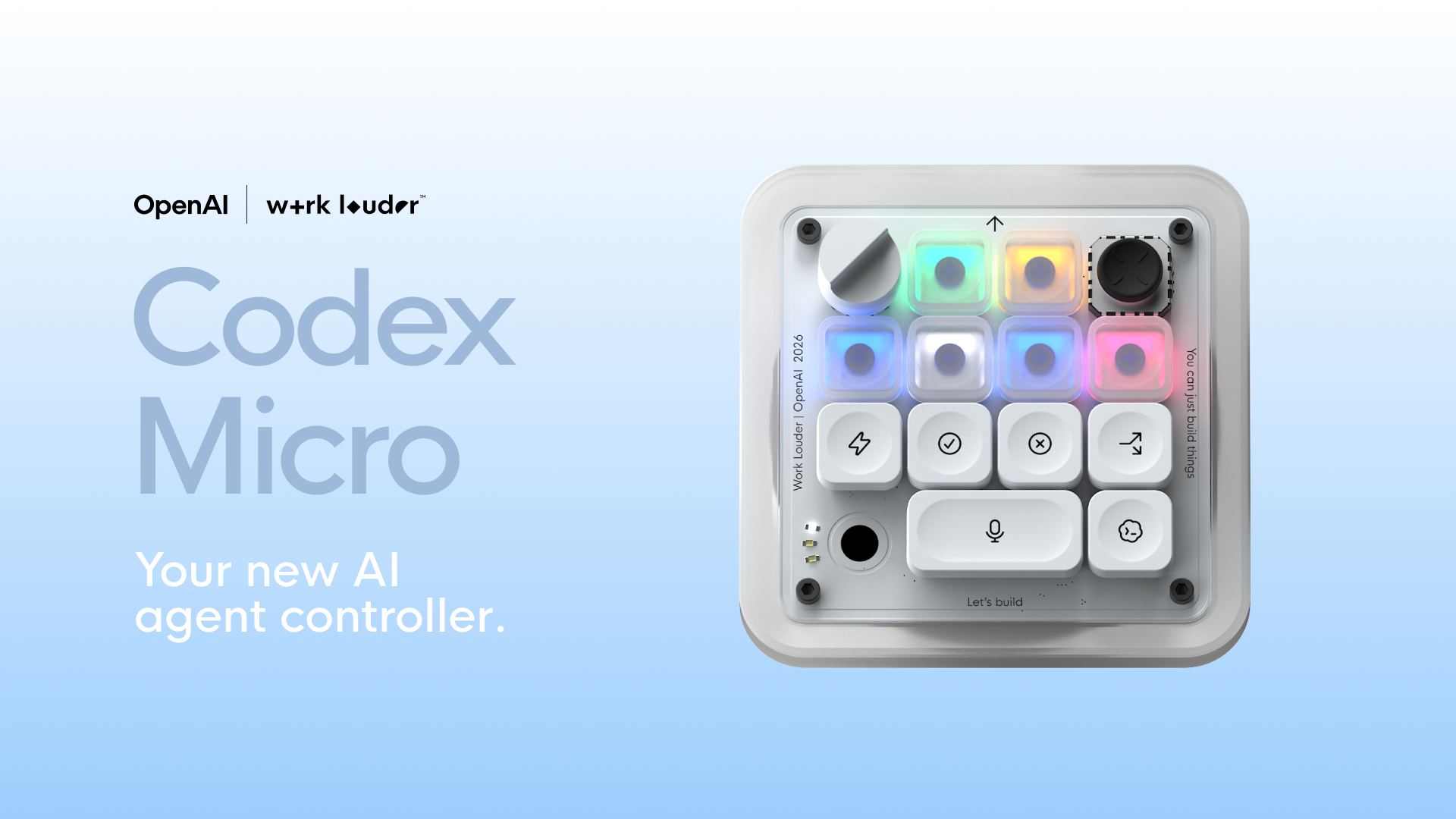
Codex Micro is a $230 programmable desktop control device from Work Louder, configured around OpenAI Codex workflows. Configuration runs through the company's Input software, which supports custom actions, multiple control layers, and software-linked layers that can switch when a selected application is in focus.
Codex Micro makes sense for someone who enjoys building a detailed control scheme around Codex. VibeKeys starts from a different place: put the common actions within easy reach, add voice and visible status, and keep the same hardware useful when the software changes.